
Brick Cleaning Galway
- Rated 5-Stars ⭐⭐⭐⭐⭐
- Brick cleaning for homes & businesses
- 10+ years of experience
- Eco-Friendly cleaning solutions
- Free brick cleaning quotes in Galway
- 500+ projects completed
Get a FREE Blick Cleaning Quote in Galway
Rated 5-Stars
EXCELLENTTrustindex verifies that the original source of the review is Google. Very helpful and great workPosted on GoogleTrustindex verifies that the original source of the review is Google. Had the guys up first time on Friday did a great job very happy in what they did very pleasant arrived on time just got on with the job highly recommend would get them again thanks guys 🙂Posted on GoogleTrustindex verifies that the original source of the review is Google. Very happy with our roof and gutter cleaning. Good communication and professional. They even removed an old satellite dish for us. Great job and much appreciated!Posted on GoogleTrustindex verifies that the original source of the review is Google. Very happy with window cleaning service. Very professional. No complaints.Posted on GoogleTrustindex verifies that the original source of the review is Google. I was really happy with the work premium power washing services did at our house. The house looks great, really freshened it up for the summer. Id highly recommend them.Posted on GoogleTrustindex verifies that the original source of the review is Google. We are delighted with the power washing service Brian provided. They were reliable, punctual and incredibly tidy. Will definitely be back next time.Posted on GoogleTrustindex verifies that the original source of the review is Google. Brian, fabulous to deal it. Guys done a lovely job. Would recommend. Thanks againPosted on GoogleTrustindex verifies that the original source of the review is Google. Fantastic service! Brian cleaned the patio, roof, gutters, windows, soft washed walls, and the house came up like new! Very fast service and so easy to deal with, highly recommend!Posted on GoogleTrustindex verifies that the original source of the review is Google. Very efficient super service extremely professional highly recommend
Professional Brick Cleaning Galway
A brick wall is not one material but three, and almost everything that goes wrong during cleaning comes from treating it as though it were one. The bricks themselves are the strongest component, but only because of their outer skin. Firing produces a hard, relatively dense face on the exposed surface of each unit while the body behind it stays softer and considerably more porous. That face is the entire weather protection of the brick. Remove it and the core is exposed, water is absorbed freely, soiling returns faster than before, and frost damage begins working on a material that was never intended to be in contact with the weather. The mortar between them is the weak point, and it is where most damage actually occurs. Mortar is softer than brick by design, since it is meant to be the sacrificial element that can be replaced without touching the units around it. Anything applied with force finds the joints first, and once pointing has been washed back a few millimetres the wall has lost its seal. Water then enters the joints directly, travels into the structure and works outward again in freezing weather, taking brick faces with it. Older walls make this more acute rather than less. Lime mortar, used on anything built before cement became standard, is softer again and far more vulnerable to both force and chemistry. It is also doing a job cement does not, allowing the wall to release moisture through the joints, and damaging it produces problems that go well beyond appearance. The pointing detail matters too. A recessed or weathered joint sheds water in a particular way, and altering its profile during cleaning changes how the whole elevation handles rain. All of which sets one constraint that everything else follows from: whatever gets used has to act on what is sitting on the wall without acting on the wall itself. In practice that rules out force entirely and leaves temperature, chemistry and patience. A deposit softens and releases at heat well before the surface holding it is troubled, and the joints between units are unaffected either way. Where soiling has bonded rather than settled, a product will lift it, though the choice of product is governed by the mortar rather than by the brick, and it has to be stopped and rinsed rather than left to carry on quietly. Anything that has travelled into the body of a unit comes back out slowly or not at all. The judgement, then, is entirely about how little will do. Buildings across County Galway include a great deal of older masonry where the answer is very little indeed, and establishing that on a small area first is the difference between an elevation restored and one permanently altered. One further characteristic of a three-material wall is worth stating, because it governs how a finished elevation reads. Bricks, mortar and pointing all clean at different rates. A wall where the brick has come back strongly while the joints have barely changed looks striped rather than restored, and pushing harder to even it up is precisely how joints get damaged. The correct approach is to accept a degree of variation, which on an older building is part of its character anyway, rather than chasing a uniformity the materials were never going to deliver together.
Why Choose Us for Brick Cleaning?
It is worth setting out how a job actually runs, because the cleaning occupies a smaller share of the time than anybody expects and the stages either side of it determine the outcome. It begins with an inspection of the wall rather than of the dirt. The brick type is identified, the mortar is examined to establish whether it is lime or cement and what condition it is in, and the elevation is checked for anything that would make wetting it a bad idea: open joints, failed pointing, defective detailing above, previous repairs in a different material, and any sign that water is already getting in somewhere. Test areas follow. Somewhere inconspicuous, the least aggressive method that could work is tried first, and the result is assessed once the patch has dried out completely rather than while it is still wet and everything looks improved. Several methods are frequently tried side by side. Where the customer is available, they see the patches and agree the approach before anything else happens. Protection comes next and takes longer than people anticipate. Windows, doors, joinery, any metalwork, planting and every adjacent surface has to be covered properly. On a building with substantial glazing that is a meaningful part of a day, and skipping it is how a straightforward job produces an expensive conversation. The treatment itself is then applied in controlled sections rather than across a whole elevation at once, working in a sequence that keeps the wall wet for as short a time as possible and prevents anything drying on the surface before it has been dealt with. Neutralising is the stage that gets omitted by people in a hurry. Any chemical applied to masonry has to be stopped, rinsed and its residue removed, otherwise it continues working long after the crew has left and produces staining, salt deposits or damage that appears weeks later. Drying then takes as long as it takes. A wall holds a great deal of water and looks entirely different wet from dry, so any judgement about the result waits until the elevation has returned to its normal state. Anybody assessing a finished job on the afternoon it was completed is assessing something else. Final inspection happens after that drying period, with photographs, and anything that has not improved as anticipated is discussed openly. Premier Power Washing works across County Galway on buildings of every age, and where the honest conclusion is that a wall should be left as it is, that is the recommendation given rather than a job taken on. Two things about that sequence catch people out and are worth stating plainly at the start. The first is duration: a properly run job on a single elevation is a matter of days rather than an afternoon, because testing, protection, sectioned application and neutralising all take real time. Anybody quoting a full frontage as a one-day exercise is describing a different process. The second is that the wall will look worse partway through than it did at the beginning, since a partially treated elevation shows every boundary between what has been done and what has not. Neither is a problem, and both cause unnecessary alarm when nobody has mentioned them beforehand.
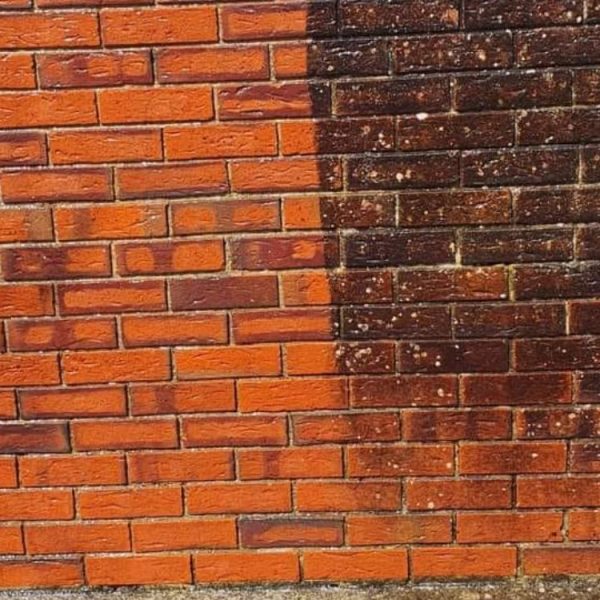
Our Latest Projects


Get a Free Brick Cleaning Quote in Galway
Cost of Brick Cleaning Galway
The single largest influence on what this work costs frequently has nothing to do with the wall, and it is worth understanding before anybody starts collecting prices. Access provision dominates. Cleaning brickwork within reach of the ground is straightforward and priced accordingly. Cleaning a full elevation at height requires proper provision, which has to be designed, delivered, erected, hired for a period and dismantled again, and on a substantial building that can comfortably exceed the cost of the cleaning it exists to enable. That figure is set by the building rather than by negotiation, and it explains most of the distance between a quotation for a boundary wall and one for a three-storey frontage. Which produces the most valuable piece of advice available on this subject: coordinate it with anything else needing attention at height. Where a building requires work to its windows, its roofline, its detailing or its decoration, having the brickwork treated while provision is already in position removes the single largest line from the figure entirely. On commercial and managed buildings that coordination is frequently worth more than any reduction achievable on the cleaning itself. The catch is that it needs planning well ahead. Scaffolding already up and due to come down next week is too late, because a treatment programme has to be scheduled and a wall needs drying time afterwards. Anybody contemplating exterior works over the next year or two should raise the brickwork at the planning stage rather than once contractors are on site. Sequencing within a shared programme matters too. Brickwork is generally cleaned before decoration and before any work that would be marked by run-off, and after anything that produces dust or debris. Getting that order wrong means paying for one of them twice. A further consideration applies to owners of terraced and semi-detached property. Where a neighbour is contemplating the same work, doing both elevations under one access arrangement halves the largest cost for each of them. That is worth a conversation over a fence before either party commits. Test areas form part of a survey without charge wherever practical, since they establish both what is achievable and how long it will take, which is what the price is actually built from. Quotations across County Galway are written and itemised, setting out method, extent, access arrangement and exclusions, so that any comparison against another price is a comparison of the same work rather than of two different jobs described in similar terms. A further item sits in every quotation and is rarely itemised anywhere: the time taken masking off everything that is not masonry. Display windows, joinery, stonework details, ironwork and signage each need covering securely before a treatment goes near them, and on a period commercial frontage those elements can occupy more of an elevation than the brick does. None of it can be hurried, because the entire risk of the job lies in what happens when something unprotected receives what was meant for the masonry. Where an owner is weighing whether to proceed at all, the sensible first step is a survey with test areas and no commitment. It costs nothing, and it converts an abstract decision into one made against a patch of their own wall.
Commercia Brick Cleaning Galway
Period buildings put to commercial use form a substantial part of the built stock in this county, and their owners face a particular version of this problem. Hospitality premises operating from older buildings trade partly on the character of the building itself. Guests choose them for it, photograph it and describe it in reviews, and a frontage darkened by decades of accumulated soiling works directly against the thing being sold. Restaurants, bars, guesthouses and smaller hotels in older masonry commission this work for that reason more often than for any other, and the effect on how a premises photographs is frequently the outcome that matters most to them. Marine exposure complicates matters here in a way inland buildings never experience. Salt-laden air deposits chloride into porous masonry over years, and that salt migrates outward as walls dry, producing the white efflorescent bloom that reappears on exposed elevations however carefully it is removed. Cleaning addresses the deposit that is visible; it does not remove salt already held within the structure. On genuinely exposed buildings the honest position is that the bloom will return periodically, and treating that as a maintenance reality rather than as a failure produces better decisions than promising something permanent. Seaward elevations also carry heavier organic growth, since persistent damp and limited direct sun favour it, and those faces frequently need a different approach from the sheltered side of the same building. Pricing them together obscures that; pricing them separately shows an owner where the money would actually go. Work onto a public footpath or a trading frontage brings arrangements of its own. Licences where a local authority requires them, barriers and pedestrian routing, and a timetable built around when a premises is quiet rather than when it suits a crew. On a street with several businesses, that timetable is worth agreeing with the ones either side as well. Owners letting property, whether short-term or on longer arrangements, commission the work on a straightforward calculation: the exterior is what a prospective guest or tenant sees first, and it sets an expectation about how everything behind it has been maintained. Buildings across County Galway handled on this basis include hotels, bars and restaurants, retail frontages, offices in converted older stock, apartment developments and civic buildings. What each receives is a written programme setting out the method proposed, the sequence of elevations, the access arrangement and the expected duration, so that trading can be planned around it rather than disrupted by it. Consent applies to a great many of these buildings and it is established before anything begins rather than during. Listed status, conservation area designation or a specific planning condition can each restrict what may be applied to an elevation, and a local authority or conservation officer will frequently want to see a method statement setting out what is proposed and why. Preparing that is part of the work rather than an obstacle to it, and it is usually straightforward, because the gentlest viable approach is also the one most likely to be acceptable. Owners occasionally discover at that point that a wall they assumed was ordinary is in fact subject to constraints. Finding that out before a contractor has started is considerably better than afterwards, and it is one of several reasons why the survey matters more here than on any other exterior surface.
Brick Cleaning FAQs
What does brick cleaning in Galway involve?
Brick cleaning in Galway removes dirt, algae, moss, staining, weathering and other surface contaminants to improve the appearance of brickwork.
Can you remove moss and algae from brickwork?
Yes. Professional brick cleaning can remove moss, algae, organic growth and built-up grime using suitable cleaning methods for the condition and type of brick.
Will brick cleaning damage the bricks?
The cleaning method is selected carefully based on the brickwork. Using appropriate pressure and techniques helps minimise the risk of damaging the brick surface or mortar.
Can you clean old or weathered brickwork?
Yes. Older brickwork can often be cleaned, although the condition of the bricks and mortar should be assessed first so the most suitable cleaning approach can be used.
Do you provide brick cleaning near me in Galway?
Yes. Brick cleaning services are available throughout Galway and surrounding areas, helping restore the appearance of residential and commercial brickwork.
Areas We Cover
Exposure along this coastline changes what brickwork needs and what it will realistically look like afterwards, and being clear about that at the outset prevents most disappointment. Salt is the factor that distinguishes buildings here. Wind-carried spray deposits chloride into porous masonry over many years, and that salt does not leave when a wall is cleaned. It migrates outward as the structure dries, appearing as a white bloom on the surface, and it will keep doing so periodically on genuinely exposed elevations. Anybody promising that a coastal wall will be permanently free of it is promising something the building cannot deliver. What can be delivered is a considerable improvement to the organic growth and atmospheric soiling, along with an honest interval for when the bloom is likely to want attention again. Sheltered walls behave far more predictably and hold their appearance for years. Elevations on the same building diverge sharply. A face taking driven rain and salt carries heavier growth than the sheltered side, so treating a whole building to a single specification generally means overworking one elevation and underserving another. Each face is assessed on its own condition and priced on its own merits. Coverage runs from the city outward across County Galway, taking in towns, coastal villages and rural properties well off any main road, with nothing added to a figure for distance. Somebody searching brick cleaning near me will be offered a look at the building rather than a figure on the telephone, at no charge and with no obligation attached. That visit does more than inspect. Wherever it is practical, a small patch is treated there and then, which means the eventual decision rests on a piece of the caller’s own wall rather than on an account of how these things generally turn out. Distance is no obstacle in itself, since everything needed arrives on the vehicles and nothing is asked of a site. What does want settling early is how an elevation above ground floor will be reached, as that arrangement takes weeks to organise rather than days. Where the tests indicate that a wall will improve less than its owner is hoping, that conclusion is given before any commitment rather than after one. Declining work on the strength of a patch is awkward in the moment and a great deal better than finishing something nobody is pleased with. One last observation about coastal work specifically. Owners here frequently assume their elevation is beyond help because it has been reappearing under a bloom for years and nobody has managed to keep it clear. In the majority of cases the underlying masonry is entirely sound and what they have been fighting is salt behaving exactly as salt does in a marine climate. Understanding the mechanism converts an apparently hopeless wall into a manageable one on a sensible cycle, and that reframing is often the most useful thing to come out of a first visit. It also changes what gets recommended, since a wall producing salt on a predictable cycle wants a light touch at intervals rather than one heavy intervention every decade, and the annual cost of the former is considerably lower than the latter.