
Roof Cleaning Galway
- Rated 5-Stars ⭐⭐⭐⭐⭐
- Residential & commercial roof cleaning
- 10+ years of experience
- Eco-Friendly cleaning solutions
- Free roof cleaning quotes in Galway
- 500+ projects completed
Get a FREE Roof Cleaning Quote in Galway
Rated 5-Stars
EXCELLENTTrustindex verifies that the original source of the review is Google. Very helpful and great workPosted on GoogleTrustindex verifies that the original source of the review is Google. Had the guys up first time on Friday did a great job very happy in what they did very pleasant arrived on time just got on with the job highly recommend would get them again thanks guys 🙂Posted on GoogleTrustindex verifies that the original source of the review is Google. Very happy with our roof and gutter cleaning. Good communication and professional. They even removed an old satellite dish for us. Great job and much appreciated!Posted on GoogleTrustindex verifies that the original source of the review is Google. Very happy with window cleaning service. Very professional. No complaints.Posted on GoogleTrustindex verifies that the original source of the review is Google. I was really happy with the work premium power washing services did at our house. The house looks great, really freshened it up for the summer. Id highly recommend them.Posted on GoogleTrustindex verifies that the original source of the review is Google. We are delighted with the power washing service Brian provided. They were reliable, punctual and incredibly tidy. Will definitely be back next time.Posted on GoogleTrustindex verifies that the original source of the review is Google. Brian, fabulous to deal it. Guys done a lovely job. Would recommend. Thanks againPosted on GoogleTrustindex verifies that the original source of the review is Google. Fantastic service! Brian cleaned the patio, roof, gutters, windows, soft washed walls, and the house came up like new! Very fast service and so easy to deal with, highly recommend!Posted on GoogleTrustindex verifies that the original source of the review is Google. Very efficient super service extremely professional highly recommend
Professional Roof Cleaning Galway
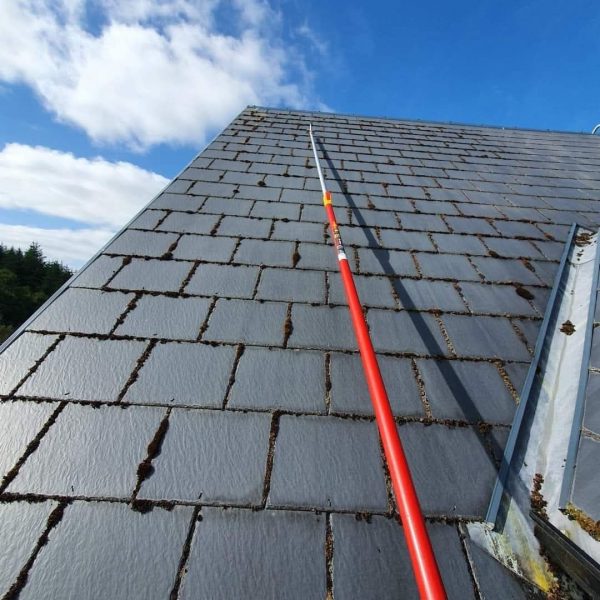
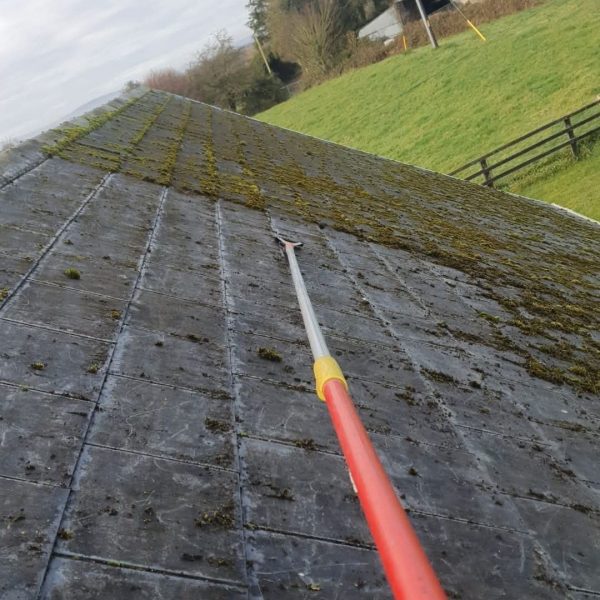
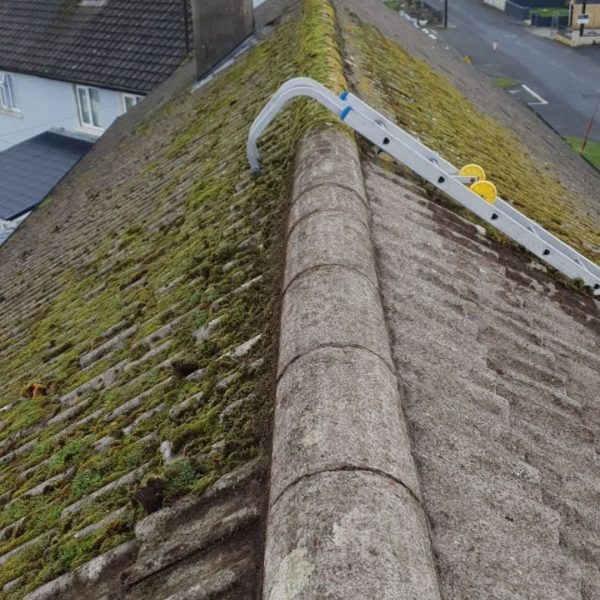
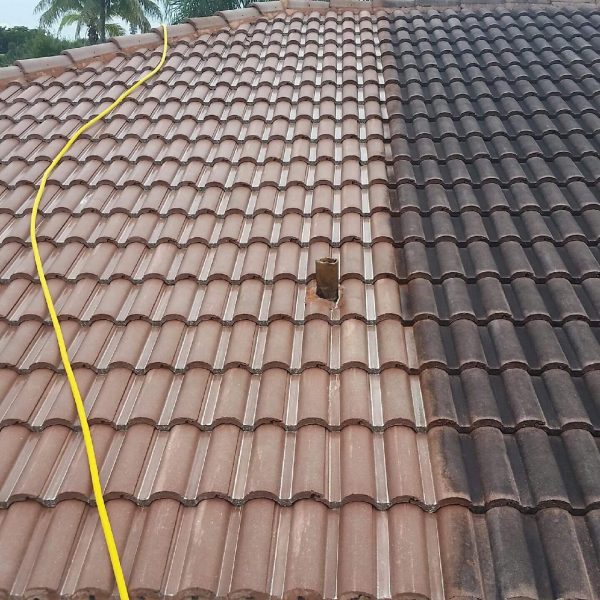
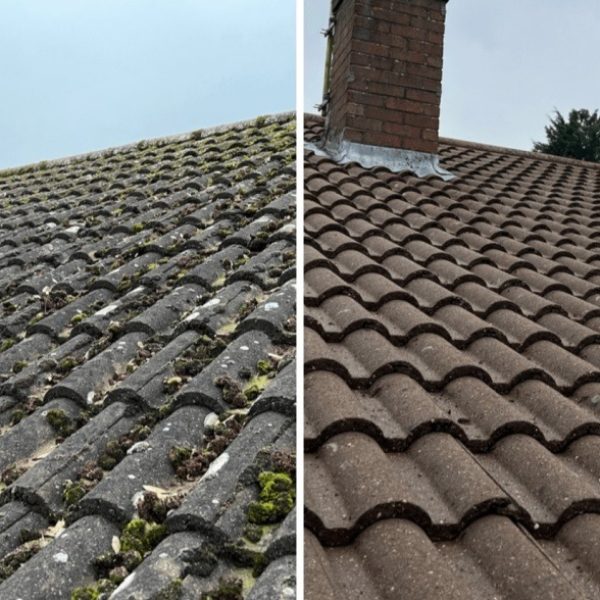
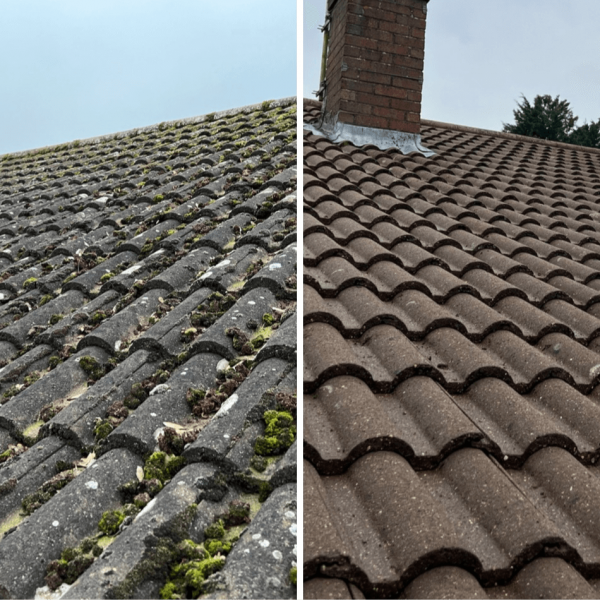
One thing worth understanding before commissioning this work is that a properly cleaned roof does not look finished on the day the crew leaves. It looks better, considerably so, but the full result arrives gradually over the following months. Anyone promising an immediate, uniform transformation is describing a different process, and that process is the one that damages coverings. The work runs on a timeline rather than a single visit. Day one is mechanical removal. Established moss, which on a neglected roof can form cushions several centimetres deep, is scraped away by hand, worked in the direction the covering sheds water so nothing is lifted, levered or dislodged in the process. Growth pushed down into the laps between units is teased out rather than forced. The volume of debris this produces surprises most owners, and all of it is collected, bagged and taken off the property instead of being pushed off the edge and left in a heap below. Day one also includes the treatment. A biocide is applied at low pressure across the whole covering, reaching the spores, lichen and algae that no scraper can touch. Lichen in particular anchors into the pores of concrete and slate, and mechanical removal alone leaves the anchor points intact, which is precisely why untreated roofs regreen within a season. The treatment is not rinsed off. Rinsing it off removes the only part of the job that lasts. From there, weeks two to twelve do the work. The remaining growth dies back and gradually detaches, and ordinary weathering carries it away. Rain does the clearing. The covering continues lightening throughout that period, and photographs taken three months apart tell a very different story from photographs taken on the afternoon of completion. What deliberately does not happen at any stage is the application of serious force. Concrete tiles carry a granular surface layer applied at manufacture, and stripping it exposes the porous body underneath, which then absorbs water freely and colonises faster than it ever did before. Slate delaminates. Water driven upward beneath laps enters the roof structure. A great many coverings around County Galway have had a decade removed from their lives by an afternoon of aggressive washing that looked spectacular at the time. Exposure here accelerates everything. Salt-laden air, prolonged damp and Atlantic weather driving against seaward elevations mean growth establishes faster and returns sooner than in sheltered inland conditions, and north-facing pitches that never fully dry are worse again. That argues for realistic intervals rather than for harsher methods, and a covering brought back properly and maintained on a sensible cycle will outlast one blasted clean every few years by a comfortable margin. The end result is a covering shedding water as designed, freed from the retained moisture that drives freeze-thaw damage, and restored to something close to its intended appearance without a year being taken off it in the process. It is worth adding that the debris produced during removal has to be dealt with as part of the same operation. Growth taken off a neglected covering fills more bags than any owner anticipates, and leaving it heaped below, or allowing it to wash into the drainage arrangements, simply relocates the problem into a place where it will cause a different one later in the year.
Why Choose Us for Roof Cleaning?
Roof work has an awkward feature that no other exterior job shares: the customer cannot see it. The surface being paid for is invisible from every point on the property, and whether the work was carried out thoroughly, partially or barely at all is not something a homeowner can verify by looking up. That imbalance is why this particular trade attracts operators who would not last a month working at ground level, and it dictates how everything here is organised. The answer is documentation, and a great deal more of it than most people expect. Photographs are taken across the whole covering before anything begins, not a flattering corner of it, and again once mechanical removal and treatment are finished. Every elevation is captured, including the ones facing away from the road that nobody would ever check. Where a pitch cannot safely be walked, imagery is captured from the access equipment or from a pole so that no part of the roof goes unrecorded. Because the treatment works over months rather than hours, a further set of images is taken at the point the covering has finished clearing. That closing record is the one that actually demonstrates the result, and it is the reason customers who were sceptical on completion day tend to become the ones who recommend the work afterwards. Alongside the images comes a written account of the covering’s condition. Slipped or cracked units, mortar failure at ridges and hips, foot traffic damage from earlier work, and areas thinned by previous aggressive cleaning all get noted with photographs, whether or not any of it produces further work. That information concerns somebody’s building and it belongs to them, not to whoever happened to be up there. The crew that surveys a roof is the crew that cleans it. Nothing is passed to whoever is free that week, so the person who assessed the covering and formed a judgement about how it should be handled is the person whose weight goes onto it. Premier Power Washing has operated no other way, and it eliminates the commonest reason a finished job bears little resemblance to the one quoted. Advice about intervals is given specifically rather than as a standard line. Exposure varies enormously across County Galway, and a house taking salt-laden air and wind-driven rain on an unsheltered elevation will need attention sooner than one sitting behind shelter with a southerly aspect. Quoting the same return period to both would be easier and would be wrong, and the recommendation frequently means a longer gap and a smaller invoice than the customer anticipated. Occasionally the assessment concludes that a covering has deteriorated past the point at which cleaning is worth doing. That gets said outright, with the photographs to support it, and no work follows. Turning down a job on evidence is uncomfortable in the moment and considerably cheaper than completing one that was never going to satisfy anybody, and it is the main reason this business runs on recommendation rather than advertising.
Our Latest Projects
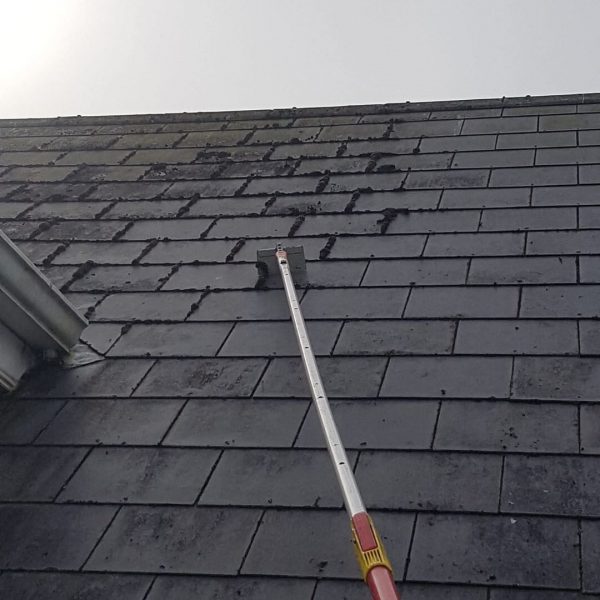
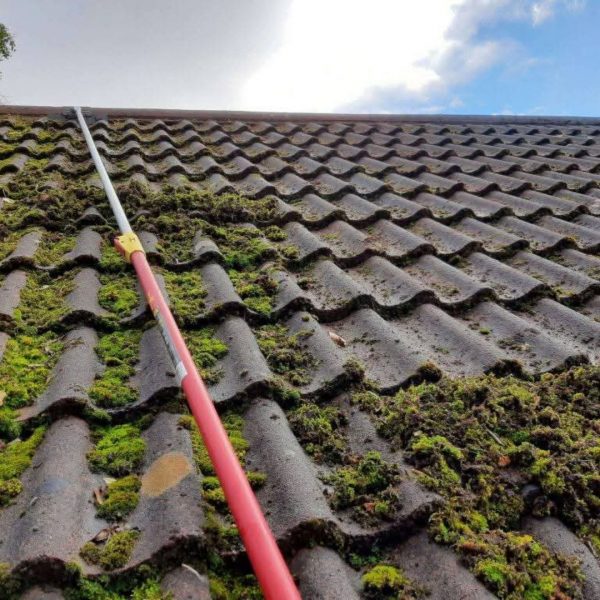
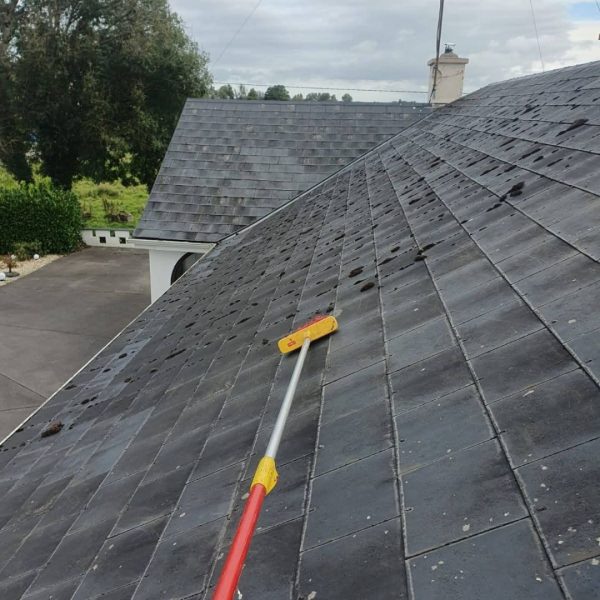
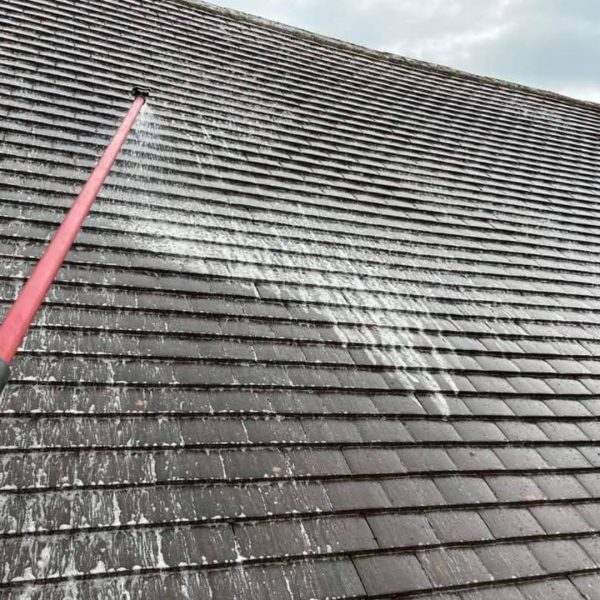
Get a Free Roof Cleaning Quote in Galway
Cost of Roof Cleaning Galway
The most useful question to ask about a roof cleaning quotation is not what it costs but what it contains, because two figures for the same building routinely describe two entirely different pieces of work. The first divergence is method. A quotation covering treatment alone, sprayed across the covering and left to act, is a legitimate piece of work on a roof carrying nothing but algae and a light film. On a covering under years of established moss it is close to useless, because a biocide cannot penetrate a saturated cushion several centimetres thick, and the customer waits months for a result that never fully arrives. A quotation including full mechanical removal of that growth by hand, ahead of treatment, costs meaningfully more for the obvious reason that somebody spends days doing it. The second is access. Proper provision positioned around a building, allowing safe working and safe movement, is a substantial part of any honest figure. A ladder leaned against the edge is not provision, it is a saving passed to the customer at somebody else’s risk, and it produces work carried out only where a person can reach without moving, which is why so many cleaned roofs look convincing from the front and untouched from the rear. The third is debris. A neglected covering yields an astonishing quantity of removed growth, and collecting it, containing it, bringing it down and disposing of it properly is a real cost. The alternatives are pushing it over the edge and leaving it, or washing it into the drainage arrangements, and both are problems handed to the customer rather than solved. The fourth is what arrives afterwards. A condition report with photographs of every elevation, including whatever was found along the way, takes time to produce and has value beyond the clean itself, particularly on a building nobody has been up close to in years. Access provision is generally the largest single line, and it is fixed by the property rather than negotiable. Firm level ground on every elevation with room to position equipment makes for an efficient job. Sloping or soft ground, an extension or conservatory interrupting an elevation, restricted space at one side, or additional height all raise that figure before any growth has been touched. Every covering across County Galway is therefore quoted after inspection and never before, because none of the above can be judged from a description or a photograph taken from the garden. Surveys cost nothing and carry no obligation, the resulting quotation is written and itemised, and the method proposed is stated explicitly so that any comparison being made is a fair one. Where a cheaper figure has arrived from elsewhere, customers are welcome to ask which of the four elements above it leaves out, and that question usually answers itself. One pattern holds across almost every property. The first clean of a long-neglected covering is the most expensive it will ever have, because it absorbs days of mechanical work and produces an enormous volume of debris. Once that growth is off and the covering is being maintained on a sensible interval, subsequent visits are a fraction of the original figure and take a fraction of the time.
Commercial Roof Cleaning Galway
Managed and commercial buildings introduce a party absent from any domestic job: somebody who has to justify the expenditure to other people. A managing agent answers to a board and to leaseholders funding the work through a service charge. A facilities manager answers to a budget holder who did not see the roof. That changes what a contractor needs to supply, and specification and evidence matter as much as the cleaning. The most useful thing offered to agents is help writing the specification before it goes out to tender. Roof quotations are notoriously difficult to compare because contractors describe the work differently, and a low figure very often reflects treatment only where another includes full mechanical removal, or reflects work from a ladder where another includes proper access provision around the building. Setting out precisely what is required in advance — extent, method, access arrangement, debris handling and reporting — means the returned prices describe the same job, which is the only circumstance in which the cheapest one is genuinely the cheapest. Evaluating those returns is where agents most often want a second opinion, and it is given willingly even where the outcome favours somebody else’s price. A tender that comes in well below the others is not automatically suspect, but it should be explicable, and if nobody can explain it the agent is the person who carries that decision. Notice to occupants is drafted as a matter of course, in a form that can be circulated directly. It covers dates, expected noise, parking implications, whether windows should stay closed, and the point that generates almost every complaint on residential blocks: why the covering will still show dead growth for weeks after the crew has gone. Explained beforehand, that ceases to be an issue. Discovered afterwards, it becomes a series of phone calls to somebody who did not commission the work. Site arrangements centre on what happens below. Debris removed from a roof falls, so a controlled drop zone is established with barriers and signage and maintained throughout, and parking bays, bin stores, entrances and pedestrian routes are sequenced so that no part of a building loses access for an entire day where that can be avoided. For the agent’s own file, completion produces a photographic record of each elevation before and after, a written condition report noting anything observed outside the scope, and confirmation of the products applied. On buildings where the covering has never been inspected at close quarters, that report frequently proves more valuable than the clean, because it converts an unknown liability into a documented one that can be budgeted against. Where an agent holds several buildings throughout County Galway, the work is usually best sequenced rather than tendered afresh each time. Establishing which structures are in the worst condition, dealing with those first and bringing the rest onto a rolling cycle behind them produces a predictable annual figure instead of a series of unwelcome surprises, and it means no single service charge year absorbs the whole cost. Where funds are only released at a fixed point in the financial year, the programme is built around that timing rather than pushing against it. One caution is worth passing on to anyone commissioning this for the first time. The pressure to accept the lowest return is considerable when leaseholders are funding the work and every euro is visible to them. A covering damaged by an aggressive method will not present a bill this year or next, but it will present one eventually, and it will land on a service charge account belonging to the same building.
Roof Cleaning FAQs
How often should I have my roof cleaned in Galway?
The ideal frequency depends on the type of roof, its condition and the amount of moss, algae, dirt and staining present. Regular roof cleaning can help keep your roof looking clean and well maintained.
Can roof cleaning remove moss and algae?
Yes. Professional roof cleaning can effectively remove moss, algae, lichen, dirt and other unwanted build-up. The appropriate cleaning method will depend on the roof and its condition.
Is roof cleaning safe for my property?
Yes, when carried out by experienced professionals using suitable equipment and cleaning methods. Premier Power Washing Services takes care to use appropriate techniques for the roof being cleaned.
How long does roof cleaning take in Galway?
The time required depends on the size of the roof, its condition, accessibility and the level of moss, algae or staining present. Each roof is assessed individually to determine the most suitable approach.
Why choose Premier Power Washing Services for roof cleaning?
Premier Power Washing Services has over 10 years of experience and has completed more than 500 projects. We use professional equipment and proven roof cleaning techniques to provide reliable results throughout Galway.
Areas We Cover
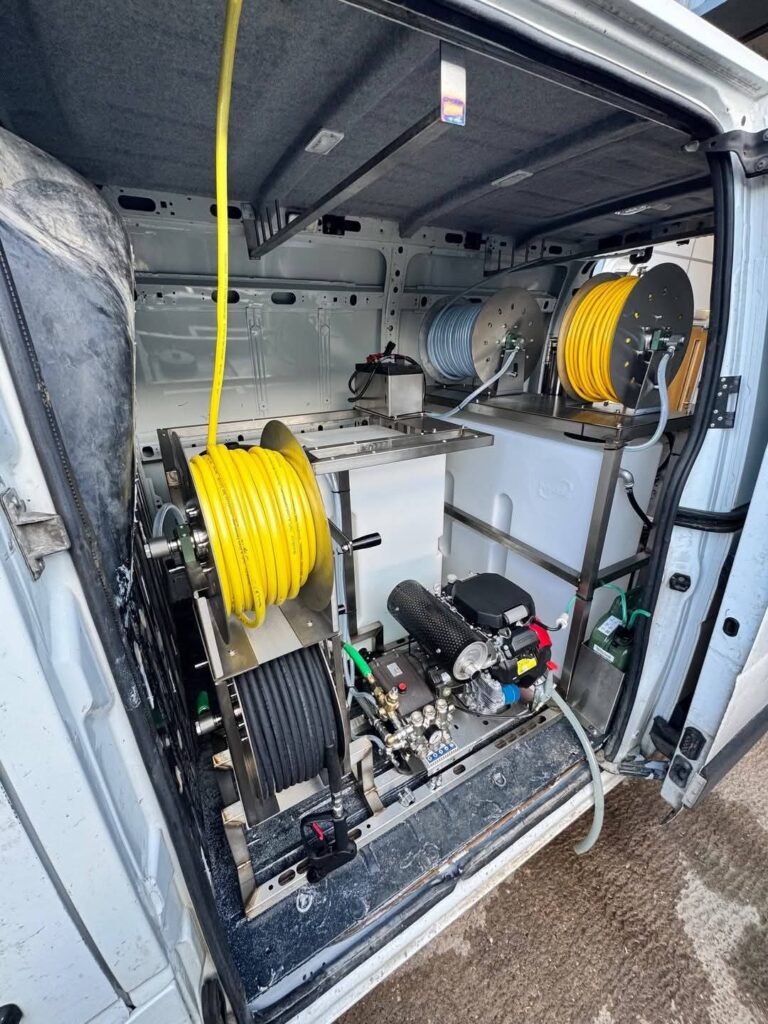
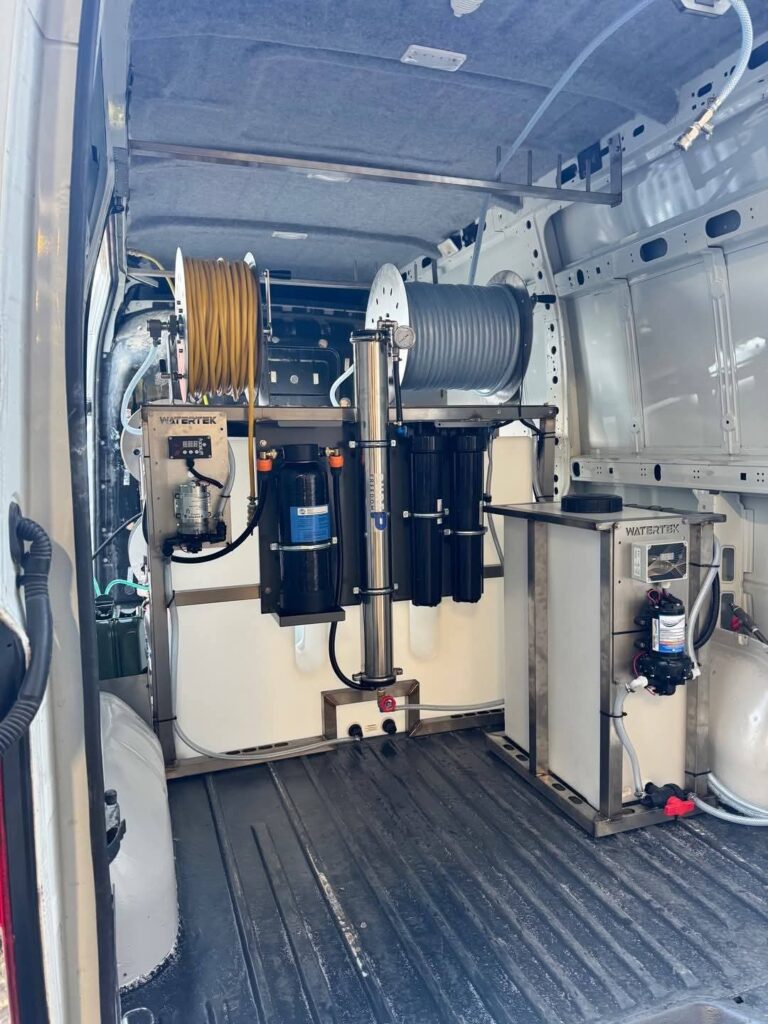
It is worth setting out what actually happens between a first phone call and a finished roof, because the sequence explains why this work cannot be priced in the way people expect. An enquiry takes a few minutes. What the building is, roughly how old the covering, how many storeys, what can be seen from the ground and whether there is space for equipment. That conversation establishes whether an inspection is worth arranging, and it is honest about cases where it is not. Somebody searching roof cleaning near me who describes a light green tinge on a covering laid four years ago is usually told to leave it alone for another season or two, which is not what they rang for and is the correct answer. Where an inspection follows, it is free and it is carried out properly. That means getting up to the covering wherever it is safe to do so, rather than assessing it through a telephone lens from the lawn. Growth is measured for depth, laps are examined for material driven into them, the surface of individual units is checked for wear and previous damage, and the structure is assessed for whether it will safely take foot traffic at all. Photographs are taken throughout and handed over regardless of whether any work is commissioned. A written quotation follows within a few days, itemised, stating the method, the access arrangement, what happens to the debris and what the customer receives afterwards. It stays open long enough to be considered properly, compared with others and discussed at home. Nobody is telephoned to ask whether they have decided yet. Scheduling is where this work differs from every other exterior service, because weather governs it absolutely. Treatment holds best on a dry covering during settled conditions, and safe work at height depends on wind as much as rainfall. Dates are therefore offered with genuine contingency built in, and where conditions force a change, a call comes the day before rather than a crew failing to appear. That honesty costs bookings occasionally and it beats the alternative. Coverage extends to every part of County Galway, city addresses, coastal villages and inland properties well off any main route, with no supplement attached to distance. Vehicles carry their own water and power and access equipment is transported to site, so nothing is required of a property beyond somewhere sensible to park. Afterwards, the covering keeps improving for weeks and months as the treatment works and weathering clears the dead growth, and customers are told that plainly at the outset rather than left to wonder. A closing set of photographs is taken once the process has finished, which for most roofs is the first time the owner sees what they actually paid for. Homeowners, landlords, farmers and managing agents all move through the same sequence. The scale changes, the order does not, and neither does the willingness to say when a covering does not need the work at all. That last point costs a certain amount of business every year and it is the reason the phone keeps ringing. Somebody told candidly in March that their roof can wait until next season is the person who calls when it genuinely cannot, and the person who passes the number on to a neighbour in the meantime.